Rapid Transit is changing how we move around London
Find out how bus-only lanes work and what the changes mean for you.
The official website for the City of London, Ontario
Starting September 6, buses will begin using the completed centre-running bus lanes on Wellington Road between Simcoe Street and Grand Avenue. If you’re travelling through the area, you’ll see buses operating in the middle of the road, along with new transit platforms, signals, signs, lane markings and turning movements. These dedicated lanes are for buses only. Other vehicles will continue to use the regular traffic lanes.
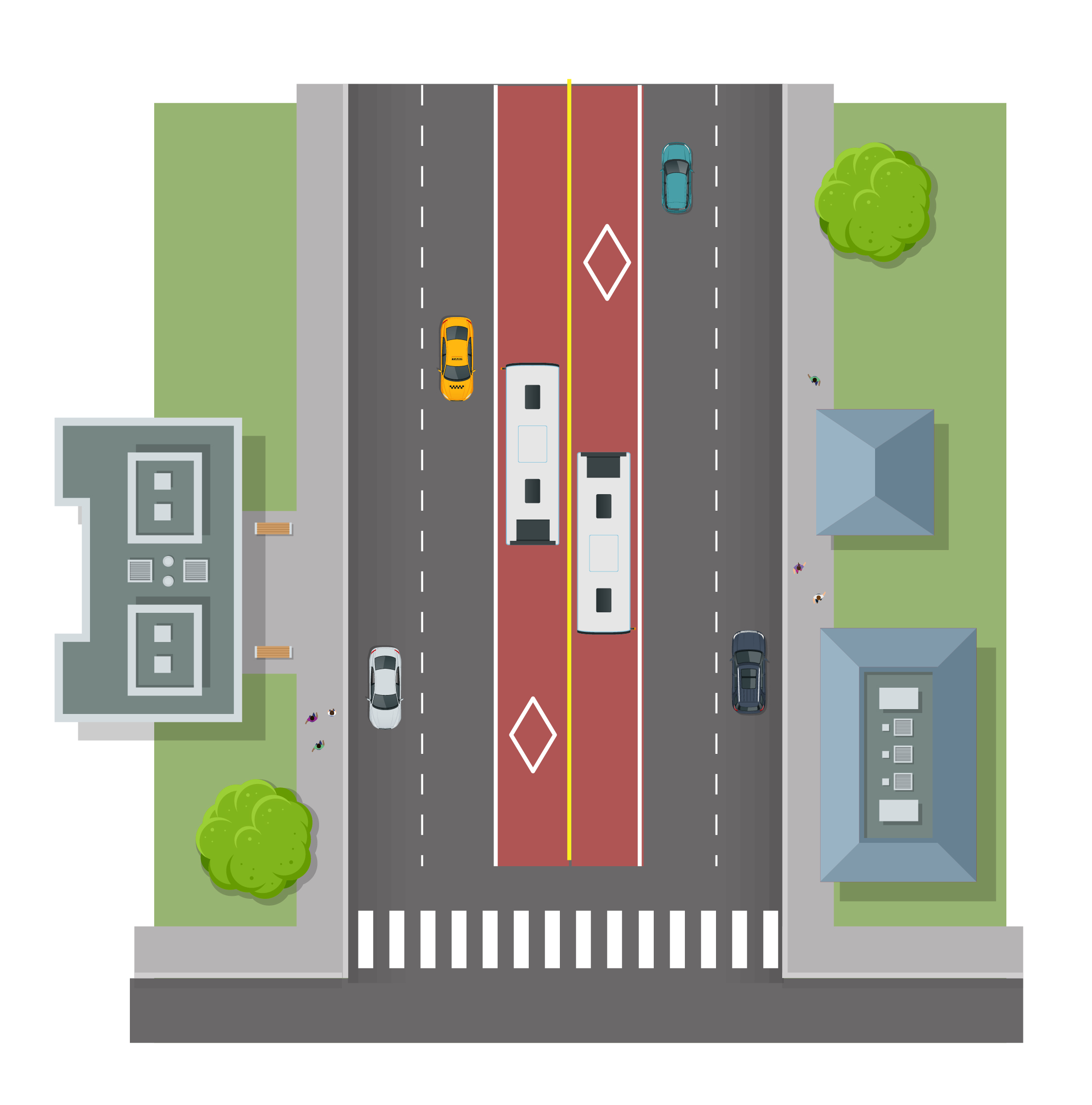
Centre-running bus lanes are dedicated lanes located in the middle of the road. They allow buses to travel separately from regular traffic and stop at platforms located in the centre of the street.
Unlike traditional bus stops located at the curb, riders access centre platforms using marked crossings and pedestrian signals.
Centre-running bus lanes are reserved for buses. Other vehicles must use the regular traffic lanes beside them.
Bus-only lanes are identified with signs, diamond symbols, pavement markings, and red pavement in some locations. These markings indicate that the lane is reserved for buses and is not open to general traffic.
A solid double-wide white line separates the bus lane from regular traffic lanes. Drivers must stay out of the bus lane at all times.
A bus-only lane sign shows that a lane is reserved for buses and authorized vehicles. Drivers and cyclists should stay out of the bus lane and not stop, park, or drive in it.

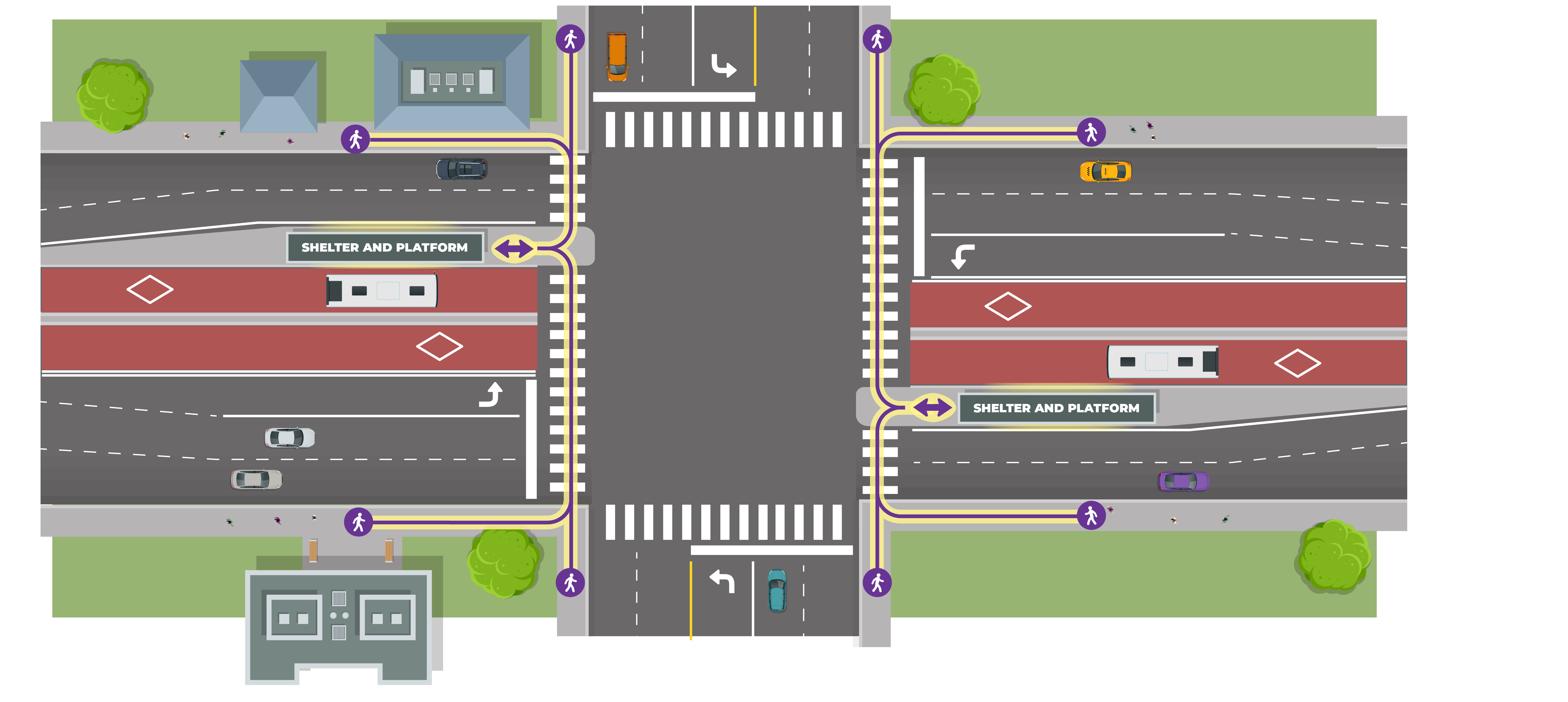
Centre-running bus lanes place buses in the middle of the road, with vehicle lanes on either side. Because of this design, drivers will not be able to turn left across the bus lane into driveways, businesses or side streets along the corridor.
Instead, left turns will happen at nearby traffic signals. Drivers can still reach destinations on the other side of the road by continuing to the next intersection and making a permitted U-turn or left turn.
Traffic signals will include dedicated times for left turns and U-turns, similar to the advance green signals drivers already use today. These protected turns help make movements through intersections safer and more predictable for drivers, pedestrians, cyclists and buses.


At intersections where U-turns are allowed, drivers may see a “U-turns Permitted” sign. These signs identify designated locations where drivers can safely turn around to reach destinations on the opposite side of the road when a direct left turn is not available.

Centre transit stops are located in the middle of the road between bus-only lanes. They provide a dedicated space for passengers to wait, board and exit buses.
Because these stops are located in the centre of the road, passengers will use designated crossings at traffic signals to safely access the stop.
To access a centre platform safely:
Starting Sunday, September 6, 2026, existing LTC routes will begin using centre-running bus lanes where Rapid Transit infrastructure is complete. This includes:
Transit riders can get the most up-to-date information by visiting LTC’s website or contacting Customer Service at or 519-451-1347.
Starting Sunday, September 6, 2026, LTC Express Route 90 will begin using the centre-running lanes where Rapid Transit infrastructure is complete.
These routes were selected because they provide frequent service along major corridors and can use the dedicated lanes to help reduce delays and improve travel times.
Local routes, including Routes 1 and 13, continue to operate from traditional curbside stops along these corridors to serve neighbourhoods and provide connections across the city.
Transit riders can get the most up-to-date information by visiting LTC’s website or contacting Customer Service at or 519-451-1347.
Rapid Transit infrastructure is being built in phases. Some sections are ready for service before the full network is complete, allowing riders to benefit from the new infrastructure sooner while the remaining work continues.
Yes. Centre platforms are designed to be accessible and include features that help people of all abilities access transit safely and comfortably.
Accessibility features include:
No. Bus lanes are reserved for buses and authorized vehicles. Stopping, parking, or making deliveries in the bus lanes is not permitted.
Access to businesses and properties remains available. In some locations, drivers may need to continue to the next intersection and make a U-turn instead of turning left directly across the centre-running bus lanes.
Cyclists should continue using designated cycling facilities and bike lanes along the corridor. Centre-running bus lanes are reserved for buses and are not available for cycling.
Cyclists should take extra care near intersections, pedestrian crossings, and transit platforms, and follow all signs and pavement markings.