Rapid Transit is changing how we move around London
Find out how bus-only lanes work and what the changes mean for you.
The official website for the City of London, Ontario
Rapid Transit includes a variety of features that work together to make transit faster and easier to use.
Before these features appear on the street, significant underground and early construction work takes place.
This includes replacing watermains, upgrading utilities, and rebuilding the road structure. Once this work is complete, the visible Rapid Transit features can be installed. These features include: transit signals, medians, and rapid transit shelters.
Transit signals are special traffic signals used by buses in Rapid Transit corridors. They help buses move through intersections safely by giving them their own advanced signal ahead of regular traffic.
Unlike regular traffic lights, transit signals are only for buses. Drivers, cyclists, and pedestrians should continue to follow the regular traffic signals.
You may notice transit signals near bus lanes and transit stations. They are marked with “TRANSIT SIGNAL” signs and may look different from the traffic lights you are used to seeing.


These are the standard signals used by cars, cyclists, and other road users.
These signals are separate from regular traffic lights and are used by transit vehicles. They may be mounted on the same pole as regular traffic signals, but positioned lower or closer to the pole. In some locations, black signals are shared by transit and cycling where buses and people cycling use the same lane.
Transit signals use different symbols to show when buses can move through an intersection safely.
Allows buses to move in the direction shown.

Allows buses to move when the intersection is clear.

Medians are raised or painted areas that separate traffic lanes. Along Rapid Transit corridors, they help separate buses from regular traffic and guide where drivers can turn.
A key feature of Rapid Transit is median control, which means most turns are made at signalized intersections instead of between intersections. This reduces conflicts between road users, improves safety, and keeps traffic moving more smoothly.
Depending on the location, medians may include landscaping, concrete islands, or painted areas.
Rapid transit shelters are the waiting areas located at transit stops. They are designed to be more visible, comfortable, and functional than traditional bus stops to support higher volumes of traffic riders.
These shelters were developed using input from the community and design best practices to ensure they work well within each neighbourhood while maintaining a consistent overall look across the city
Rapid Transit shelters include:
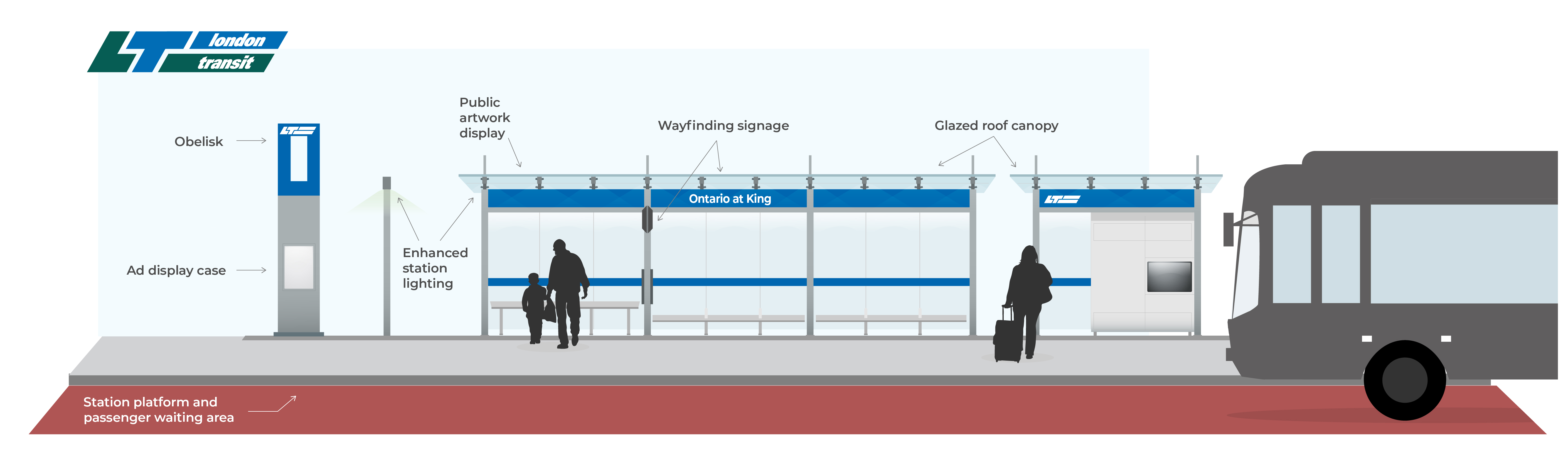
Each shelter also includes a unique obelisk feature that helps people identify Rapid Transit stops from a distance.
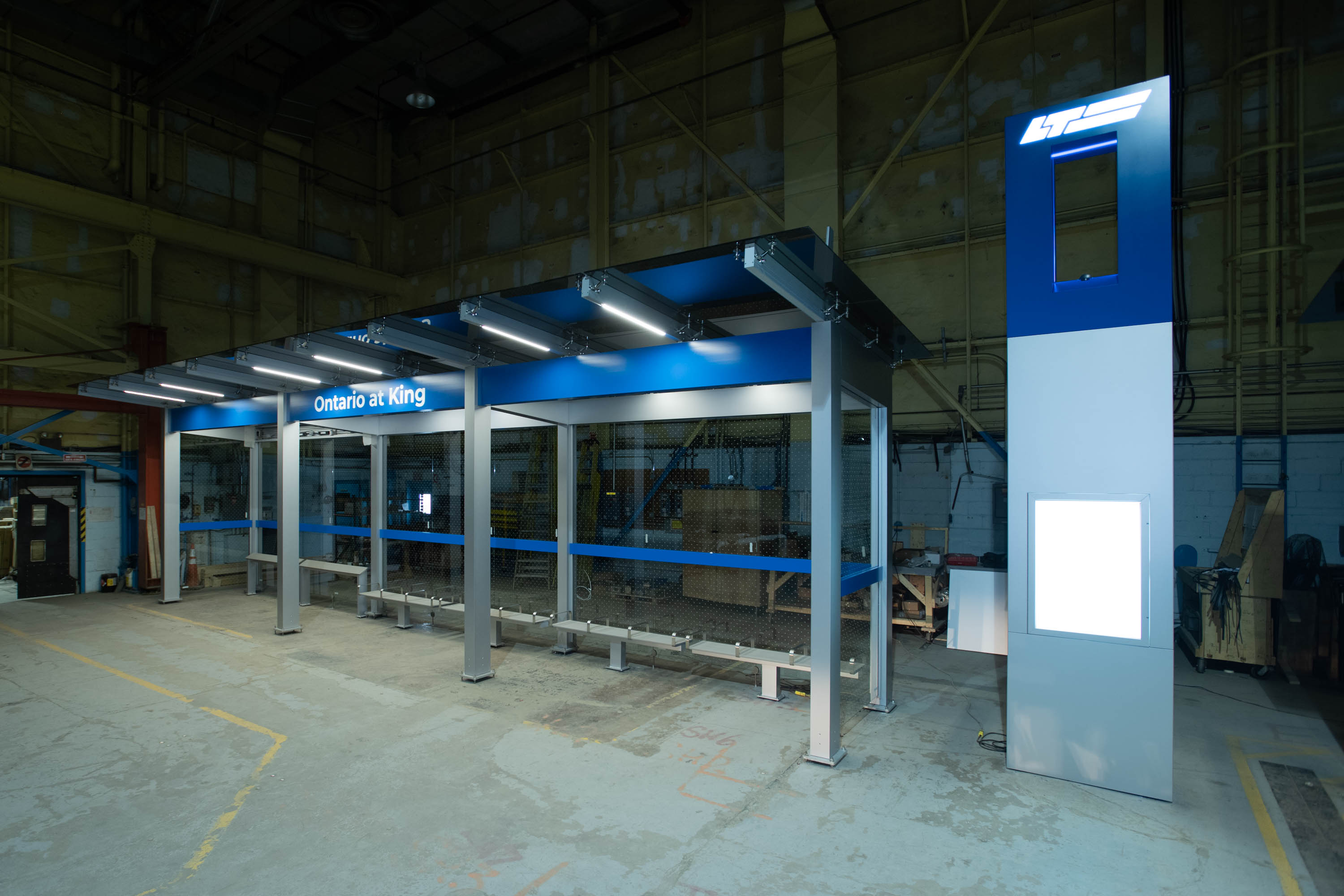


Rapid Transit shelters are designed for higher passenger volumes and faster service. They include:
Shelters are added in phases as construction is completed. Once a stop is ready, buses begin using the new facility.
Shelters also include opportunities for public art installations, helping connect the transit system with local communities and neighbourhood identity.
Public artwork created by local London artists is being incorporated into new Rapid Transit shelters along the Downtown Loop, East London Link, and Wellington Gateway corridors.
The artwork reflects themes identified through community consultation during the Rapid Transit Environmental Assessment (EA), the planning process used to gather public input and evaluate the Rapid Transit system.
Themes include local history, culture, diversity, transportation, and London's UNESCO City of Music designation.
Artwork has already been installed on Rapid Transit shelters in the downtown core. As new shelters are built, the City will invite the public to help inform the artwork featured at future shelter locations through upcoming engagement opportunities.