Your new waste collection schedules will be delivered between late October and early November.
In the meantime, you can view your schedule online or pick it up at City facilities.
The official website for the City of London, Ontario
On Sunday, September 6, London Transit (LTC) Express Route 90 will begin using a small, completed section of London’s first centre running bus lanes on Wellington Road between Simcoe Street and Grand Avenue.
This is an important step in introducing Londoners to a new way of moving through the corridor. The section will allow the City and LTC to see how the new road design works with buses, drivers, pedestrians, and cyclists using the corridor together. It will also give Londoners an opportunity to become familiar with new transit platforms, signals, signs, lane markings, and turning movements.
“This is a small piece of a much larger Rapid Transit network, but it is an important step in bringing the work we’ve been building to life,” said Jennie Dann, Director, Construction & Infrastructure Services. “Opening this completed section to buses will give us an opportunity to learn from real-world operations and help Londoners become familiar with the new design as construction continues on other sections of network.”

Rapid Transit service is currently expected to begin operating on the East London Link corridor in 2027, with Wellington Gateway service anticipated for 2029. Additional sections of the network will open as construction is completed.
Centre-running bus lanes are new for London. If you’re travelling along Wellington Road between Simcoe Street and Grand Avenue, you will see buses travelling in the middle of the road. These dedicated lanes are reserved for buses only.
Centre-running lanes give buses their own dedicated space and help reduce interactions with other vehicles, parked cars, and curbside activity. This allows buses to move more consistently through the corridor, supporting more reliable service while providing safe, protected platform areas for passengers to wait and board the bus.
That means buses can keep moving through busy areas, while drivers have fewer buses pulling in and out of their lane. Separating buses from general traffic helps both buses and other vehicles moving more smoothly.
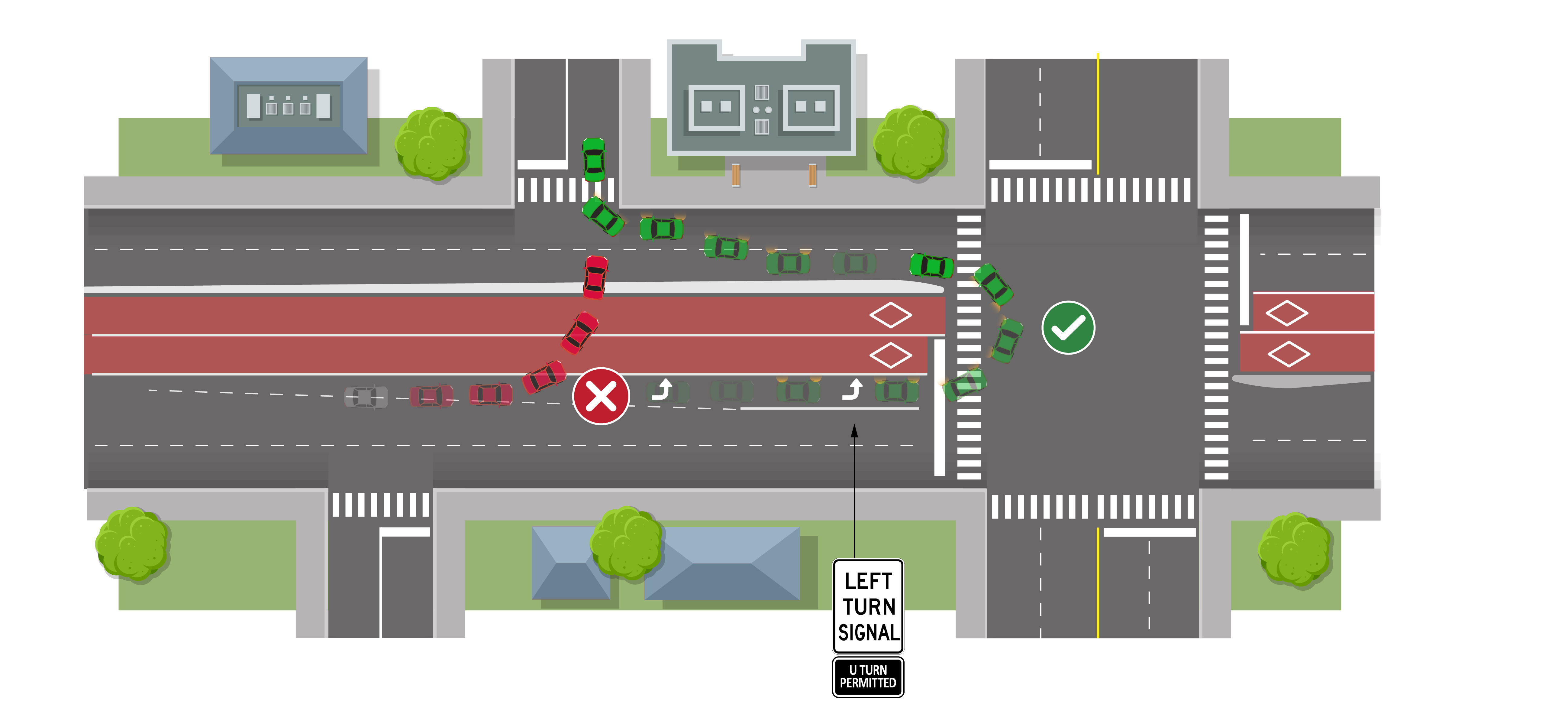
For drivers, one of the biggest changes will be how some left turns work. New medians and the centre-running lanes mean drivers will not be able to make direct left turns into some driveways or smaller side streets.
Drivers can continue to the next traffic signal, make a U-turn where permitted and then turn right to reach their destination. Look for signs indicating where U-turns are allowed.
Over time, drivers will become familiar with the new road layout and adjust their routes based on what works best for them. Some may choose a different approach to their destination, while others may use the U-turn at the next intersection.
For transit riders, the biggest change will be where they board. Route 90 buses will use the centre-running lanes at the Wellington and South station. Riders using this station will board from new protected platforms located in the middle of the road.
All other Route 90 stops will continue to be served from curbside bus stops. LTC Routes 1 and 13 will continue using existing curbside bus stops on Wellington Road.
Rapid Transit platforms are located at signalized intersections, and riders should use the designated pedestrian crossings to safely access the platforms.
Everyone using the corridor should watch for new signs, signals, and pavement markings, and take extra care while getting used to the new design.

More information about how centre-running bus lanes work and what drivers, pedestrians, cyclists and transit riders need to know is available at London.ca/BusLanes.
Riders can visit LTC’s website for route information, schedules and trip planning tools, or contact LTC Customer Service at or 519-451-1347.