

A growing city needs more ways to move
As more people live, work, and travel across the city, we need a transportation system that provides more choices.
Cars will continue to play an important role in how people get around London. Rapid Transit is not about replacing cars; it’s about adding another way to travel. By giving people more options for getting around the city, Rapid Transit can help manage congestion and support travel as London continues to grow.
Construction is already underway on three Rapid Transit projects across the city, representing approximately $454 million in investment. More than $167 million of this funding comes from Federal and Provincial partners.
How Rapid Transit helps London move more people
As London grows, more people need to travel on the same road network. Since roads can't keep getting wider, we need to make better use of the space we already have.
Different ways of travelling use road space differently. A bus can carry dozens of people in the space taken up by only a few cars. Giving people more travel options help move more people using the same roads.
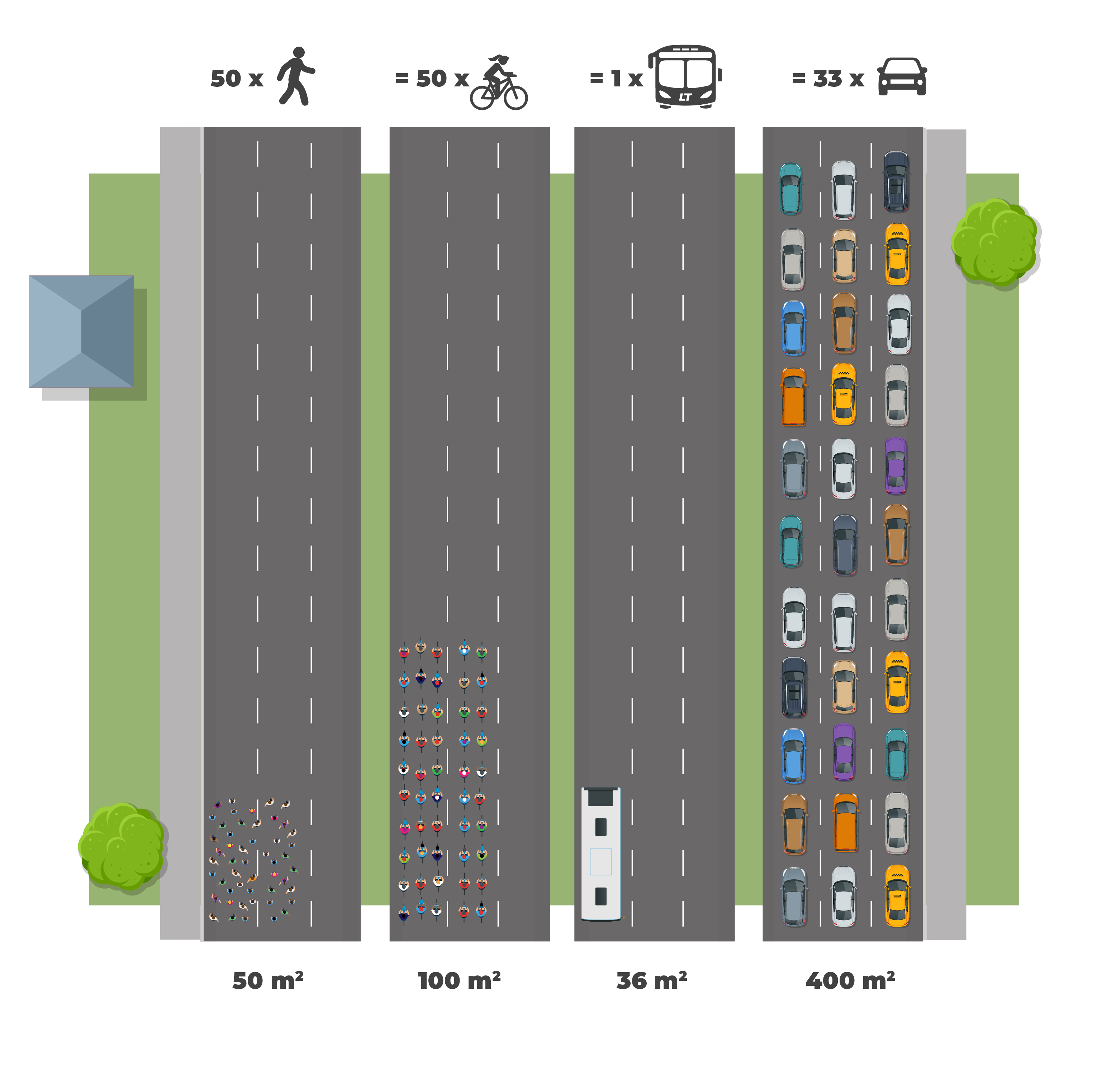
The Mobility Master Plan is London’s long-term transportation strategy. One of its goals is to increase transit use to 13% of all trips. Rapid Transit supports that goal by making transit a more practical option for more people, helping move more people while making better use of existing road space.
What is Rapid Transit
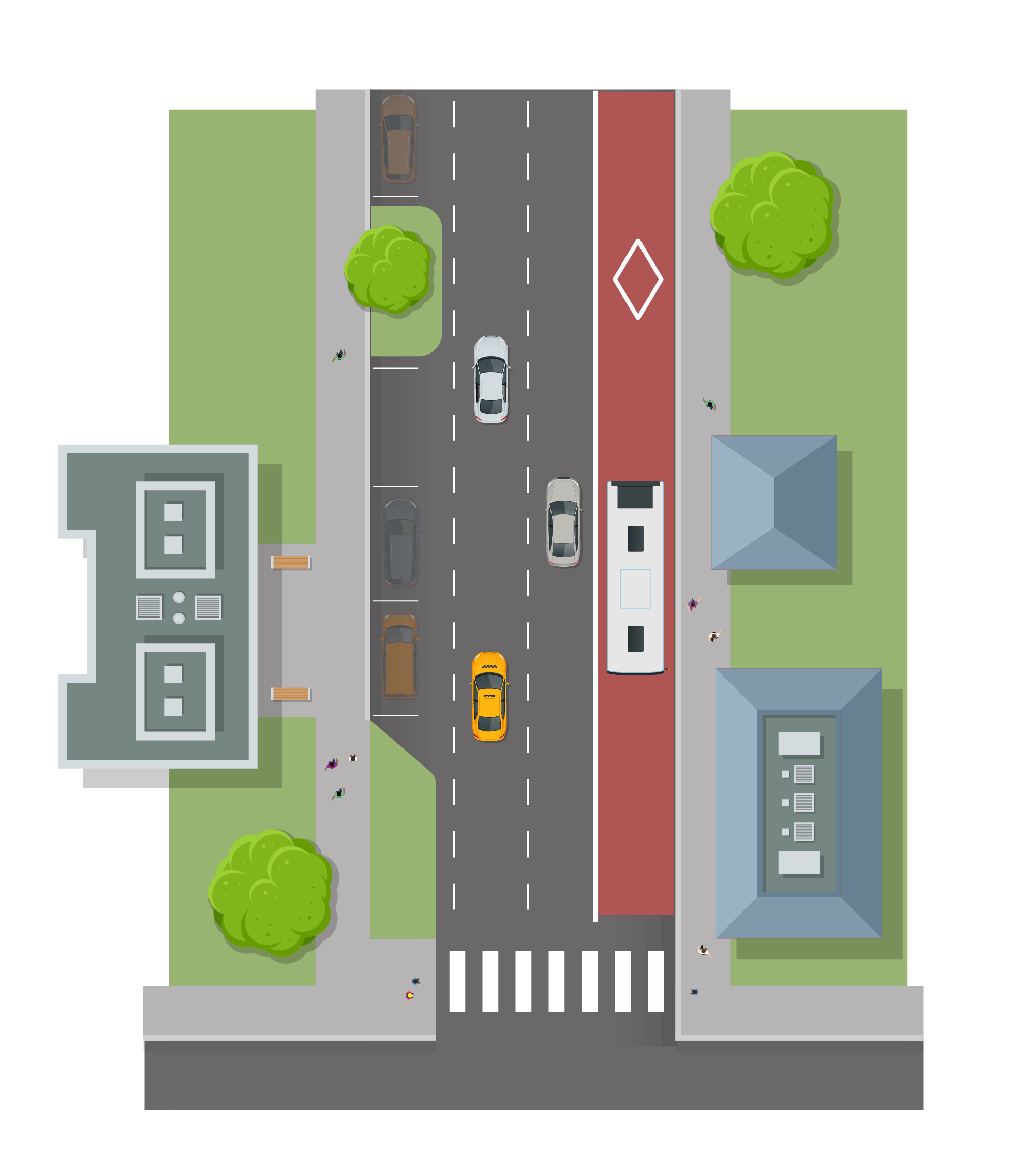
Today, London Transit operates local and express bus routes across the city. Rapid Transit will add faster bus service along some of London's busiest roads by building dedicated infrastructure that helps buses move through the city with fewer delays.
Rapid Transit includes:
- Bus-only lanes that help buses avoid traffic
- Traffic signals that help buses move through intersections faster
- Better connections with existing bus routes
- Modern, accessible stations with real-time bus information
- More frequent service, with buses arriving every 5 or 10 minutes
Together, these features help reduce travel times and make transit faster.
Preparing for Rapid Transit operations
Rapid Transit is still under construction and is not yet in service. As the City and London Transit Commission (LTC) prepare for the system to open, planning is also underway to make sure Rapid Transit works as part of London’s entire transit network.
A recent report prepared by Stantec for the City and LTC looks at how ready London is to operate Rapid Transit, how the broader transit network can make the most of the new infrastructure, and what still needs to be in place before service begins.
The report looks at both the rider experience and day-to-day operations, including how people board, pay fares and connect between services. It also identifies opportunities to improve transit service as London continues to grow.
The report was requested by City Council as part of a broader review of London’s transit system and has been received by Council. LTC will report back to Council later in 2026 with recommended next steps.
What is it being built?
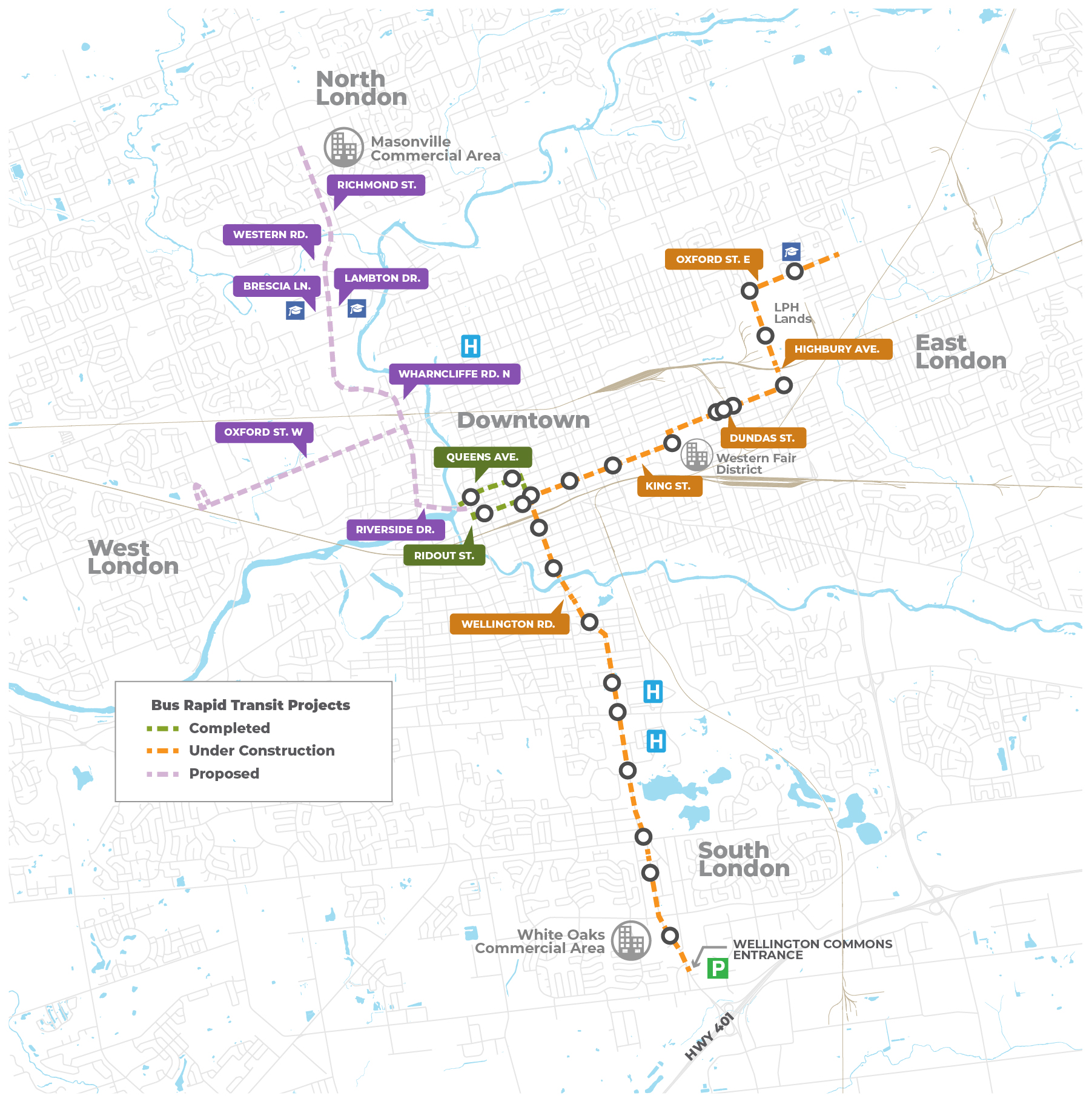
The City is building the infrastructure needed for Rapid Transit in the downtown core and along key corridors, including Wellington, King, Dundas, Highbury and Oxford.
This work includes:
- Bus lanes
- Transit stations
- Sidewalk improvements
- Cycling facilities
- Traffic signals
- Road improvements
- Underground infrastructure upgrades
Why Rapid Transit construction includes more than bus lanes
Rapid Transit construction involves more than adding bus lanes. Before new roads and transit features can be built, crews are replacing aging underground infrastructure, including watermains, sewers and utilities.
By coordinating this work at the same time, the City can upgrade multiple pieces of infrastructure in one project instead of digging up the same road again in the future. This helps improve transit, renew aging infrastructure and reduce future construction impacts.
Rapid Transit projects
Downtown Loop
The Downtown Loop is the heart of the Rapid Transit system, running along King Street, Wellington Street, Queens Avenue and Ridout Street. Completed in 2024, it serves as the central hub that will connect future Rapid Transit corridors across the city.
Today, existing bus routes are already using the Downtown Loop and benefiting from bus-only lanes and transit signals that help buses move through downtown more easily.

East London Link
The East London Link will improve 6 kilometres of road between Downtown and Fanshawe College The project includes dedicated transit lanes, road improvements and new infrastructure to help buses faster along this corridor.

Wellington Gateway
The Wellington Gateway project will improve about 6.35 kilometres of Wellington Road between Downtown and Highway 401. The project includes dedicated transit lanes, road improvements and new infrastructure to help buses move faster along this busy corridor.

Future Rapid Transit corridors
The East and South corridors are the first phase of London's Rapid Transit network. Full Rapid Transit service is expected to roll out in stages, beginning with the East London Link in 2027 and Wellington Gateway in 2029.
Looking beyond the current projects, London's Mobility Master Plan confirms future Rapid Transit corridors in the North and West, creating a city-wide network that will connect more residents to jobs, education, services, and destinations across London.
Future planning and implementation of the North and West Rapid Transit corridors will build on this vision.
Frequently Asked Questions
Is Rapid Transit separate from the current bus system?
No. Rapid Transit will become part of London’s existing transit system.
London Transit will continue to operate local and express bus routes across the city. These routes will continue to serve neighbourhoods and provide connections throughout London, including buses that use regular bus stops and curbside lanes.
Rapid Transit will add a new type of bus service along some of London’s busiest roads. It will use dedicated features like bus-only lanes, transit stations and traffic signals that help buses move more easily.
Together, local, express and Rapid Transit routes will work as one system, giving riders more options for getting around the city.
When will Rapid Transit service begin?
Rapid Transit service is expected to roll out in stages as construction is completed.
Current timelines anticipate service beginning on the East London Link corridor in 2027 and on the Wellington Gateway corridor in 2029.
What happens after the East and South corridors are complete?
The East and South corridors represent the first phase of London's Rapid Transit network.
London's Mobility Master Plan also identifies future Rapid Transit corridors in the North and West. Planning and design work for these future corridors is beginning to help support London's long-term growth and transportation needs.
How will Rapid Transit benefit people who don't take the bus?
Driving will continue to be an important part of how people get around London, and Rapid Transit is not intended to replace driving. The Mobility Master Plan recognizes that London’s transportation system needs to support all ways of getting around. This includes investments that improve transit, as well as projects that address road capacity and help move people and goods more efficiently as the city grows.
As the city grows, more people and more trips will put additional pressure on the road network. Adding more transportation options helps manage that growth by giving people choices for how they travel.
By improving transit along busy corridors, Rapid Transit can help move more people efficiently, reduce congestion, support local businesses, and make it easier for everyone to get where they need to go.
Why has construction taken several years?
Rapid Transit projects involve much more than surface road work.
Before visible features such as transit lanes, shelters, and signals can be installed, crews often need to replace underground infrastructure, relocate utilities, rebuild roads, and upgrade intersections. This work helps ensure the corridor can support the city for decades to come.